



La riconfigurazione in atto dell’ordine mondiale non risparmia il Sud-est asiatico. In questo numero di RISE TJ Pempel, uno dei più noti studiosi statunitensi... Read More
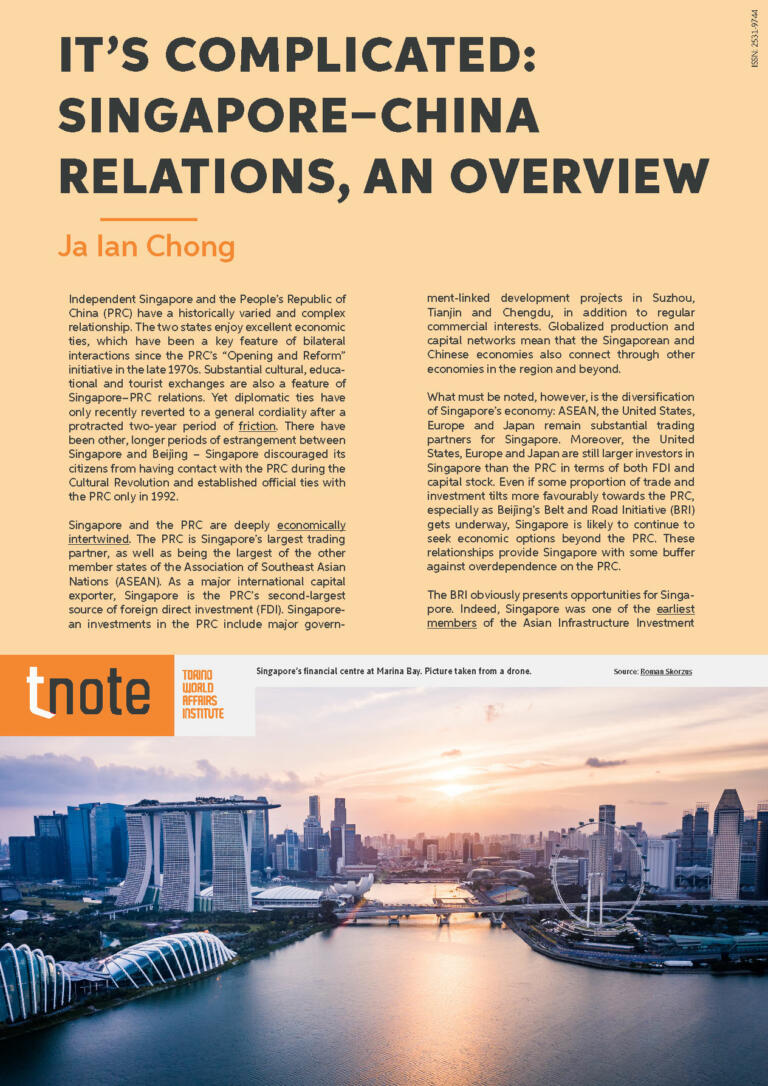
To the extent that Beijing accepts an open and inclusive Southeast Asia as well as established and binding rules, the Singapore–PRC relationship is likely to continue smoothly.
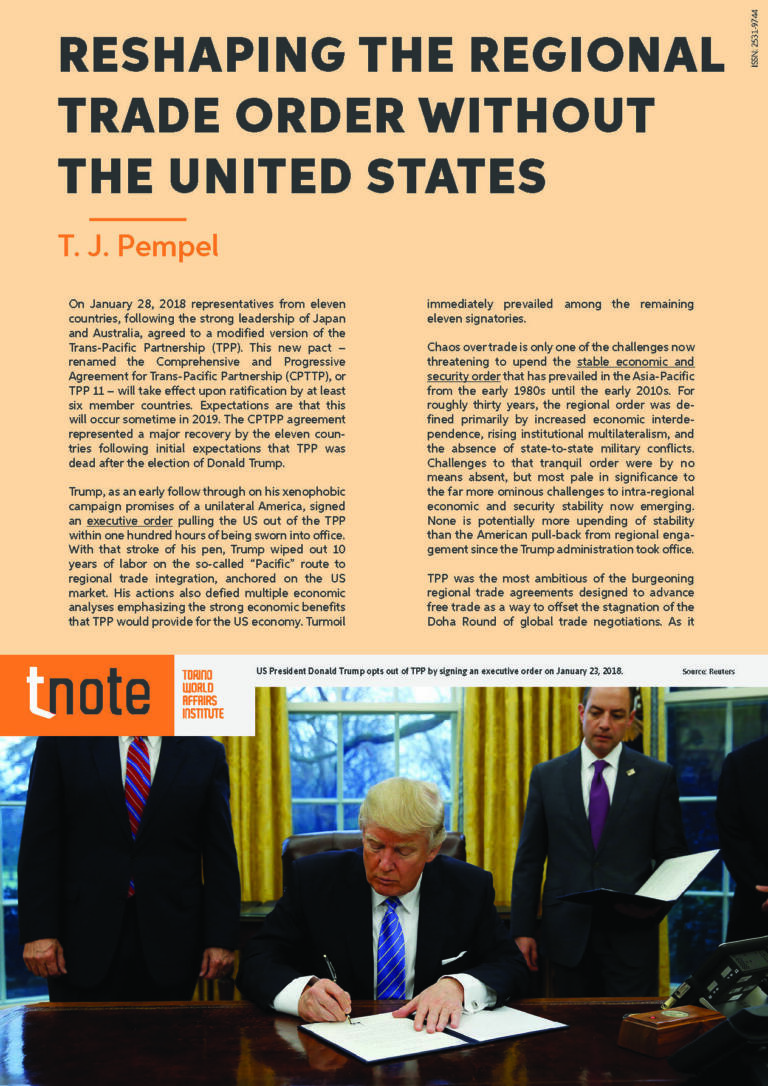
The decision to withdraw the US from TPP is therefore but one trade specific component of the broader self-isolation of the US from the Asia-Pacific more generally.
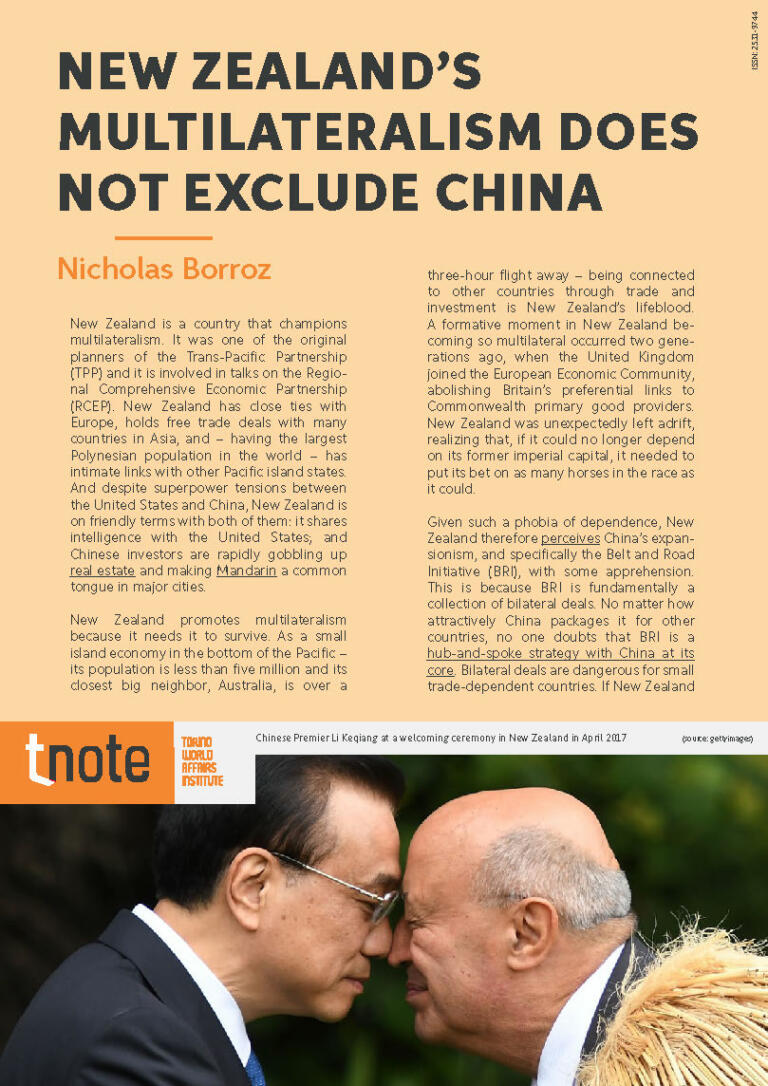
With BRI, New Zealand will examine options to use the project not just to deepen ties with China, but also to deepen ties with other countries along the BRI “spoke” where it is located.
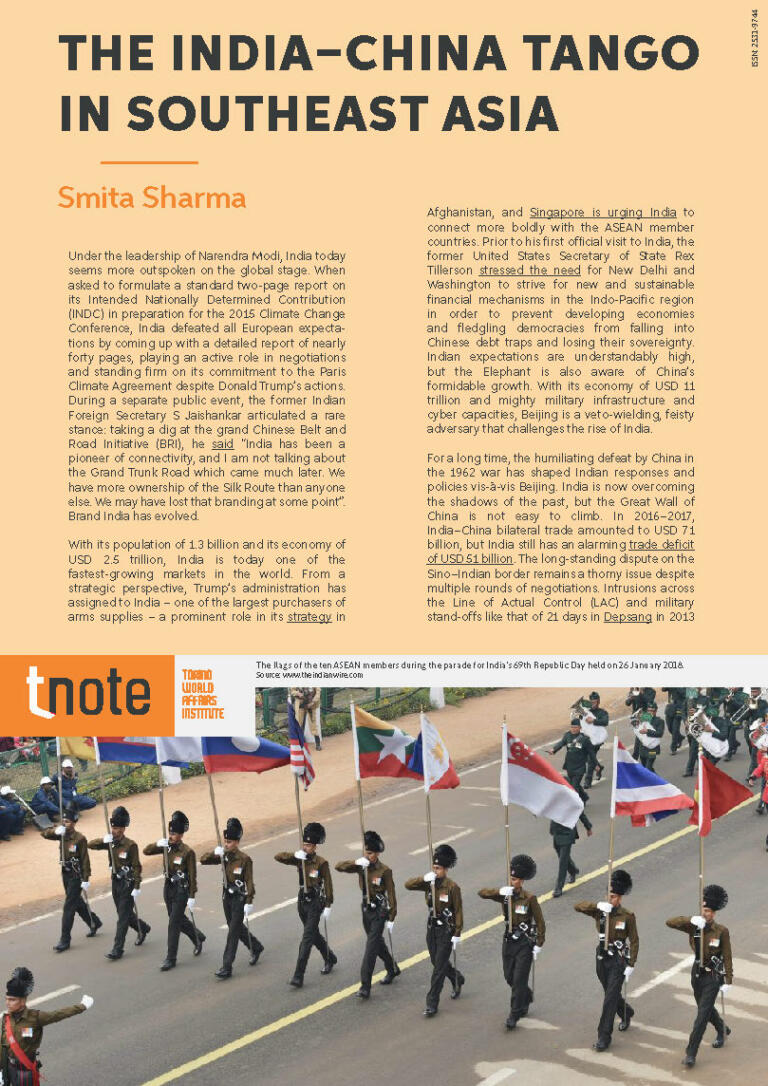
While objecting strongly to New Delhi joining ASEAN, Beijing keeps a close eye on India’s deepening ties with bloc members and with oil and gas exploration drives in the littoral states of the South China Sea.
“This alignment between French and Italian priorities finds its most tangible expression in a shared commitment to regional multilateralism – one that necessarily entails stronger ties with ASEAN and support for its centrality in the Indo-Pacific architecture. This ambition has already taken concrete institutional form when the EU and ASEAN elevated their relationship to a Strategic Partnership in 2020. Enhanced cooperation between the two blocs would also reduce vulnerability to unilateral pressure from China and the United States, thereby fostering a more balanced multilateral framework.”

Anna Caffarena is Full Professor of International Relations at the University of Torino and the Director of its Department of Cultures, Politics and Society. She has served as the first President of the Torino World Affairs Institute.
Prof. Giuseppe Gabusi is Associate Professor of International Political Economy and Political Economy of East Asia at the Department of Cultures, Politics and Society of the University of Turin. He is Head of T.wai's Indo-Pacific Program.
Pietro Masina is a non-resident Research Fellow at T.wai and a Full Professor of International Political Economy, History and Institutions of East Asia at the University of Naples “L'Orientale”.
Prof. Giorgio Prodi is Associate Professor of Applied Economics at the University of Modena and Reggio Emilia. He serves as Vice President of T.wai, the Torino World Affairs Institute.