

In their attempts to build a Hindu state in India, the right-wing populists risk losing both the decades-long experiment with democracy and the protracted attempts to create a multicultural nation where free and fearless self-expression is possible.
[IT] Fabio Armao (T.wai & Università degli Studi di Torino) scrive l’articolo "La guerra di Putin non rappresenta un ritorno al passato" nel suo nuovo blog online su MicroMega.
[IT] Fabio Armao (T.wai & Università degli Studi di Torino) nell’articolo “Ucraina, la guerra dei “cronies”: la politica mondiale ridotta gioco d’azzardo” su MicroMega.
[IT] Dopo un netto deterioramento della stabilità e della sicurezza durante l’ultimo decennio, il bilancio globale del 2020 è rimasto pressoché invariato. Questa potrebbe apparire un’affermazione troppo ottimistica in un anno dominato dalla pandemia di COVID-19, eppure è supportata dai dati contenuti nella 52a edizione del SIPRI Yearbook.
“The SIPRI Yearbookis known worldwide as an authoritative and independent source for politicians, diplomats, journalists, scholars, students and citizens on armaments, disarmament and international security. It provides an overview of developments in international security, weapons and technology, military expenditure, the arms trade and arms production, and armed conflicts, along with efforts to control conventional, nuclear, chemical and biological weapons. Key findings of SIPRI Yearbook 2026 are that states are increasingly relying on nuclear weapons as instruments of national power—reversing decades of efforts to reduce the numbers and role of nuclear weapons—even as the risks of miscalculation and escalation are rising.“
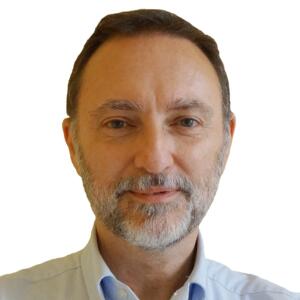
Dr. Edoardo Maria Landoni is a Research Fellow affiliated with the Violence & Security Program at T.wai and Teaching Assistant at the University of Milan.
Prof. Stefano Ruzza is Associate Professor of Political Science at the Department of Cultures, Politics and Society of the University of Turin. He is Head of T.wai's Violence & Security Program.